
The Existential Job Search: Issue #9
I. Introduction: The Unseen Jury of Your Past
There’s a moment in every job search, just before the finish line, when a cold dread washes over you. You’ve navigated the digital gauntlet, charmed the HR Gatekeeper, and survived the multi-round interview marathon. You’re almost there. The promise of a job, a paycheck, and a brief respite from the existential dread of unemployment is tantalizingly close.
Then, the email arrives. It’s not the offer. It’s the request for references. And suddenly, your entire future hinges on the subjective recollections of a few people from your past. People who might not remember your last name, let alone your stellar contributions to that Q3 project in 2017. People who might be too busy, too forgetful, or perhaps, just a little bit resentful.
This isn’t just a formality. This is the Reference Check. It’s the unseen jury of your past, convened to scrutinize every decision, every interaction, every half-forgotten detail from a life lived before the corporate panopticon. It’s the nagging fear that they’ll find out about that one time you "accidentally" kept a company laptop for a week too long, or that slightly "optimized" date on your CV to hide a three-month burnout sabbatical, or that ill-advised social media post from a decade ago.
It’s not about what you’ve done right; it’s about what they might find wrong. And in the hyper-vigilant, risk-averse world of modern HR, even the smallest dust bunny in your digital closet can derail your entire future.
II. The Digital Inquisition: What They’re Really Looking For
The term "reference check" sounds benign, almost quaint. Like a friendly librarian verifying your address. But in reality, it’s a full-blown digital inquisition, a forensic audit of your entire existence. They’re not just checking for a criminal record; that’s merely the appetizer.
They’re looking for discrepancies in your employment history. Did you fudge those dates by a month or two? Did you inflate your title? Did you claim a degree you technically haven’t finished yet? These aren’t just minor embellishments; to a background check company, they are potential red flags, evidence of a pattern of deception.
They’re scouring your social media. Not just your LinkedIn (which you’ve meticulously curated to be a monument to corporate blandness), but your Facebook, your Instagram, your Twitter, and any other digital footprint you’ve left since the dawn of the internet. That photo from college where you’re holding a questionable beverage? That sarcastic tweet about your last boss? That passionate (and poorly worded) political rant from 2016? All potential liabilities. All evidence that you might be a human being with opinions, which is, of course, a grave risk in the modern workplace.
And for certain roles, they’re even looking at your credit score. Yes, your personal finances. Because apparently, if you once struggled to pay your student loans, you’re inherently untrustworthy with corporate funds. The irony, of course, is that you’re trying to get a job to fix those financial struggles, but the system is designed to punish you for them.
What constitutes a "red flag" is often subjective and opaque. A minor misdemeanor from a decade ago might be overlooked for one role but be a deal-breaker for another. A passionate opinion on social media might be celebrated by one company but seen as a sign of "poor judgment" by another. The fear of the unknown—of what they might unearth and how they might interpret it—is often more paralyzing than any actual past transgression.
III. The Truth About References: Your Personal PR Team (or Saboteurs)
You’ve carefully selected your references. You’ve prepped them, reminded them of your greatest achievements, and probably bought them a coffee or two. You think they’re your personal PR team, ready to sing your praises. The truth is, they’re often just a formality, and sometimes, they can be unwitting saboteurs.
The Illusion of Choice: Why Your References Are Rarely the Deciding Factor
By the time they’re calling your references, the company has usually already decided they want to hire you. The reference check is often a box-ticking exercise, a final validation that you’re not a complete psychopath. They’re not looking for glowing endorsements; they’re looking for consistency. They want to confirm that the person you presented in the interview is the same person your former boss or colleague describes.
The "Soft No": How a Lukewarm Reference Can Kill an Offer
However, a lukewarm reference can be a silent killer. Your reference doesn’t have to actively badmouth you. A lack of enthusiasm, a hesitant pause, or a generic, uninspired endorsement can be enough to raise a red flag. This is the "soft no"—a polite way for a former colleague to sink your chances without actually saying anything negative. They’re not lying; they’re just not going above and beyond, and in the cutthroat world of hiring, "not going above and beyond" is a death sentence.
Managing Your Personal PR Team: The Briefing Protocol
This is where you become a master puppeteer. Your references are not just friends; they are your personal PR team, and they need a briefing. A very specific, very detailed briefing. Think of it as programming them for optimal performance.
-
The Job Description Download: Send them the exact job description. Highlight the key skills and responsibilities you want them to emphasize. Don’t assume they remember the nuances of your last role, let alone this new one.
-
The Narrative Sync: Remind them of the specific stories and achievements you highlighted in your interviews. "Remember that time I single-handedly saved the Q3 budget from collapsing into a black hole of Excel errors? That’s the kind of thing they want to hear about my 'problem-solving skills.'" Make it easy for them to parrot your carefully constructed narrative.
-
The "Weakness" Pre-Empt: If you’ve discussed a "development area" (because you’re a self-aware, growth-oriented professional, of course), brief them on it. Ensure their version of your "opportunity for growth" aligns with yours. You don’t want them to accidentally reveal your true, terrifying flaws.
-
The Enthusiasm Dial: Instruct them to dial up the enthusiasm. A neutral tone is a death knell. They need to sound genuinely excited about your potential, without sounding like they’re trying to sell a used car. It’s a delicate balance, but crucial.
-
The "No Comment" Clause: Remind them that they are under no obligation to answer questions that make them uncomfortable or that delve into your personal life. Their job is to confirm your professional competence, not to provide a tell-all biography.
Your references are your last line of defense. Treat them like the highly trained operatives they need to be.
IV. The Social Media Minefield: Your Past, Present, and Future Liability
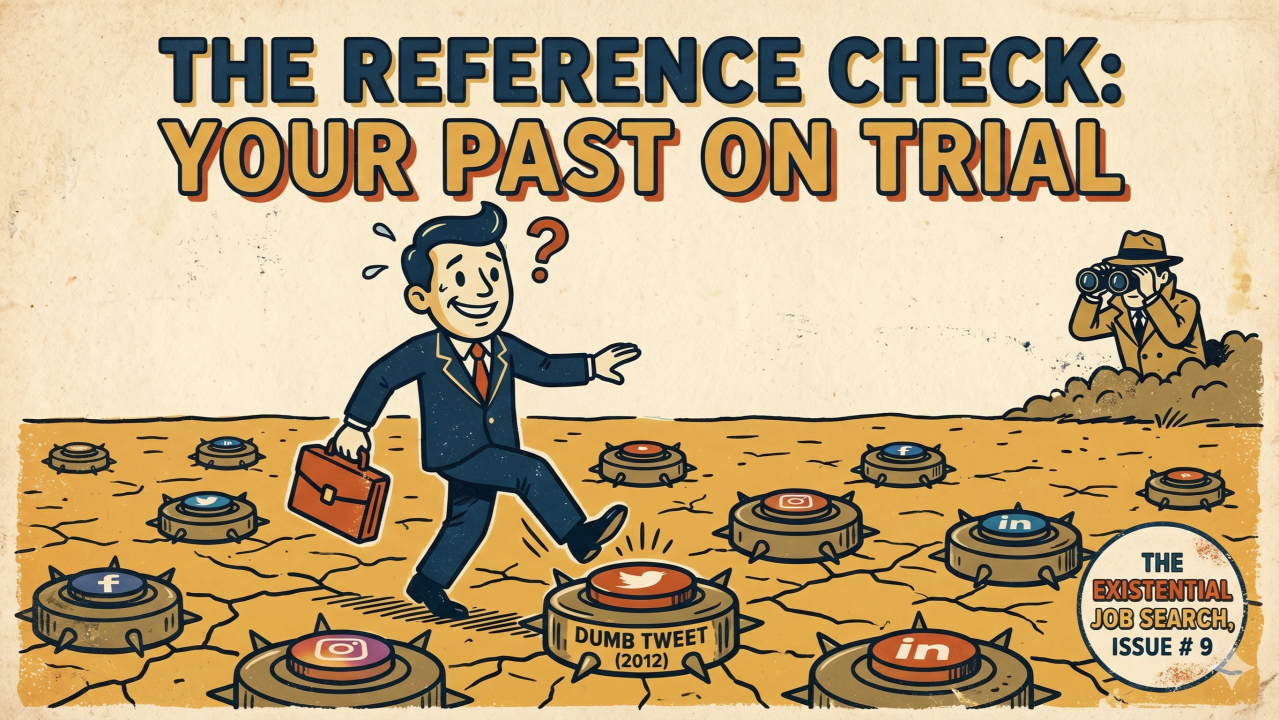
In the age of digital permanence, your social media is no longer just a personal playground; it’s a minefield. That decade-old tweet, that slightly inappropriate photo from a Halloween party, that passionate (and poorly worded) political rant—all of it is fair game. And all of it can derail a career faster than you can say "cancel culture."
The Casual Scroll: How a Decade-Old Tweet Can Derail a Career
HR departments, or the background check companies they employ, are increasingly performing deep dives into your public social media profiles. They’re not just looking for overt racism or sexism; they’re looking for "poor judgment," "lack of professionalism," or anything that might reflect negatively on the company’s brand. A photo of you enjoying a beer on a beach might be harmless, but if the company has a strict "no alcohol" policy for employees (even off-duty), it could be a problem. Your past, however distant, is now your present liability.
The "Professional" Facade: The Impossibility of Separation
We are constantly told to separate our personal and professional lives online. But in reality, this is an impossible task. The lines are blurred, and companies expect you to maintain a professional facade 24/7. That sarcastic comment you made on a friend’s post? It could be interpreted as a lack of respect for authority. That passionate defense of a controversial topic? It could be seen as an inability to be a "team player."
Cleaning Up Your Digital Footprint (or at Least Burying the Bodies)
While you can’t erase the internet, you can manage your digital footprint. This means: Privacy Settings: Lock down your personal accounts. Make sure only friends can see your posts. Delete, Delete, Delete: Go through your old posts with a fine-tooth comb. If it’s questionable, delete it. If it’s embarrassing, delete it. If it’s from before you had a mortgage, definitely delete it. * Google Yourself: Regularly. See what comes up. If there’s anything concerning, work to push it down in the search results by creating more positive, professional content.
It’s not about being inauthentic; it’s about understanding that the corporate world demands a specific performance, even in your "personal" life.
V. The Credit Score Conundrum: When Your Finances Become Their Business
For certain roles, particularly those involving financial oversight or access to sensitive data, your credit score becomes part of the background check. This is where the absurdity reaches a new level. Your personal financial history, often a reflection of life’s unpredictable curveballs, is suddenly deemed a proxy for your "character" and "trustworthiness."
The Irony: Judging the Impoverished
The irony is palpable. You’re trying to get a job to improve your financial situation, but your past financial struggles are used as a reason to deny you that opportunity. It’s a vicious cycle designed to keep the financially vulnerable in a state of perpetual precarity. A missed payment from five years ago, a medical bill that went to collections—these aren’t indicators of your ability to do a job; they’re indicators that you’re a human being living in a capitalist society.
What to Do if Your Credit Isn’t Pristine
If you know your credit isn’t perfect, be proactive. Obtain a copy of your credit report and review it for errors. If there are legitimate issues, be prepared to explain them concisely and professionally. Frame it as a learning experience, a challenge you overcame, or a temporary setback that you are actively addressing. Don’t make excuses; provide context and demonstrate responsibility.
VI. Conclusion: The Final Test of Trust (and Risk Mitigation)
The reference check is the final, invasive hurdle before the offer. It’s less about trust and more about risk mitigation. It’s their last chance to find a reason to say "no" without having to admit they just didn’t like your vibe.
You can’t change the past, but you can control the narrative. You can prepare. You can anticipate. And you can arm yourself with the knowledge to navigate this final inquisition without losing your mind.
Go forth, clean your digital closet, and try not to let them find the company laptop you "accidentally" kept.
VII. Next Week: The Offer Letter (Or the Art of the Lowball)
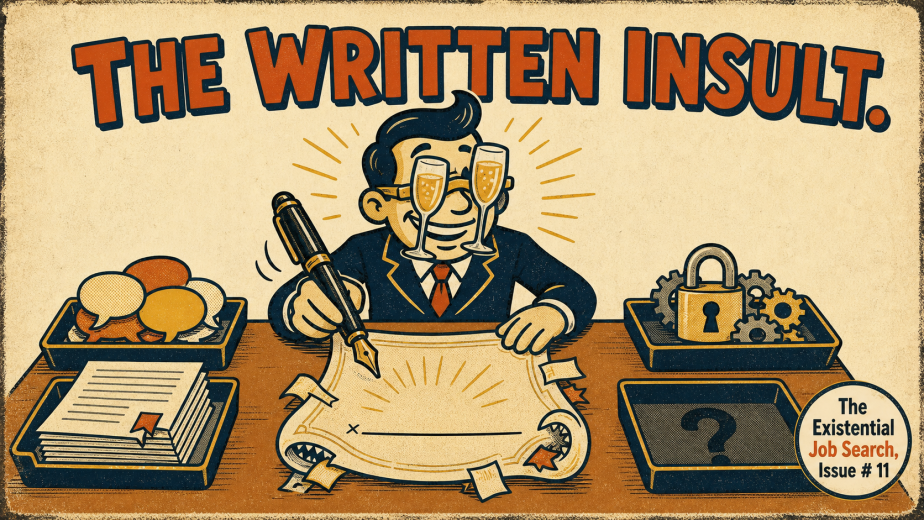
You’ve survived the inquisition. You’ve passed the final test of trust (or at least, they couldn’t find anything too damning). Now comes the prize. The offer letter. And the polite insult that comes with it. Make sure to read it
Go forth and be slightly less miserable in your job hunt.
Rob
P.S. Proactive Paranoia Management
Knowledge is power. If you know about a potential red flag, you can preemptively address it. This newsletters sponsor, UniqU, is your digital shield. UniqU's AI career coach helps you craft a compelling narrative to explain any discrepancies or past issues. Instead of being caught off guard, you can present a controlled, professional explanation that demonstrates self-awareness and growth. This turns a potential liability into a testament to your resilience and honesty.